
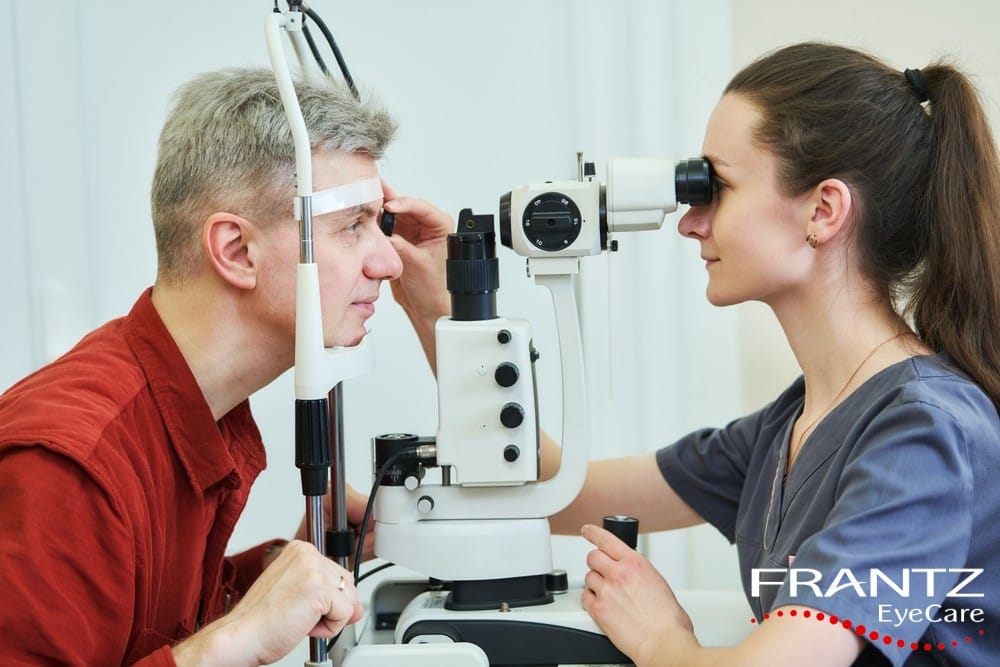
If you have been using eye drops for months but your eyes still burn, feel gritty, or water for no clear reason, you might need a dry eye exam. But what happens during a dry eye exam, and how does an eye doctor diagnose dry eye? Keep reading to learn how dry eye exams can help pinpoint the cause of your symptoms.
What Is a Dry Eye Exam?
A dry eye exam is a set of tests that measures how well your tears protect and moisten the surface of your eyes.
Your visit starts with questions about your symptoms, medications, screen time, and whether you wear contact lenses. These details help explain what may be adding to your discomfort.
Dry eye happens when your eyes do not make enough tears or when your tears dry up too fast. This can lead to symptoms including:
- A dry, gritty feeling in your eyes
- Excessive eye watering
- Redness and irritation
- Sensitivity to light
- Blurry vision
- Contact lens intolerance
- Eye fatigue
- Mucus in or around the eyes
While these symptoms often indicate dry eye, they can also signal another condition, like conjunctivitis or keratitis, which is why it’s important to get a comprehensive dry eye exam. Here are some of the tests you can expect at Frantz EyeCare:
TearLab Osmolarity Test: Measuring the Salt in Your Tears
Healthy tears have a balanced mix of salt and water. When you have dry eyes, your tears become saltier, which can irritate your eye’s surface.
The TearLab Osmolarity Test measures that salt level. A small, pen-like device touches the edge of your lower eyelid and collects a tiny tear sample of about 50 nanoliters, smaller than the period at the end of this sentence.
The test takes only a few seconds and doesn’t hurt. It gives you a clear number showing whether you have dry eye and how severe it is.
TearLab has certified Frantz EyeCare as an Accredited Dry Eye Center, and it was one of the first practices in Southwest Florida to offer tear osmolarity testing.
Bruder Ocular Surface Analyzer (BOSA): A Detailed Look at Your Tear Film
The Bruder Ocular Surface Analyzer, or BOSA, uses a camera to study your eyes without touching them. You rest your chin, look ahead, and blink when asked.
BOSA checks tear height along your lower lid, how long your tears stay smooth before breaking up, the quality of the oil layer, and how completely you blink.
BOSA can also take pictures of your meibomian glands, which are the oil glands in your eyelids, in less than two minutes. Your results come in a color-coded report that highlights which areas need attention.
LipiView: Measuring the Oil Layer of Your Tears
Your tears have a thin oil layer on top that keeps them from drying out too quickly. If this layer is too thin, your eyes can feel dry even if you make enough tears.
A LipiView scan takes a detailed digital image of this oil layer and measures its thickness. The test takes about five minutes, and you look into a camera and blink as usual.
What Your Results Mean for Treatment
Together, these tests show what kind of dry eye you have and how severe it is. This helps your eye doctor treat the cause of your symptoms.
Your treatment plan may include:
- LipiFlow or Systane iLux, which use heat and gentle pressure to clear blocked oil glands
- BlephEx, which cleans debris from your eyelid edges
- Intense Pulsed Light (IPL), which uses light pulses to loosen clogged oils
- Prescription eye drops and at-home care, such as warm compresses
Ready to find out what’s behind your dry, irritated eyes? Schedule an appointment at Frantz EyeCare in Fort Myers, FL, today.